
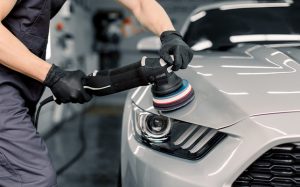

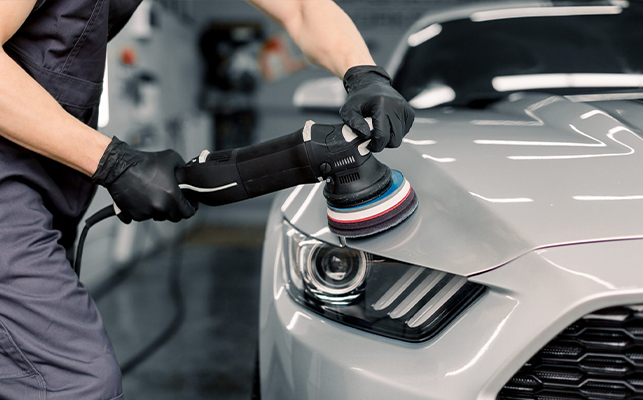
If you’ve ever pulled up next to a car that looked like it just rolled off the showroom floor, deep, glossy paint, water beading off the panels like it’s got somewhere to be, chances are it’s been properly waxed and not just washed. Waxed.
For most Aussie drivers, car waxing doesn’t get much thought until the paint starts looking flat or chalky. But a consistent waxing routine is one of the most practical ways to protect your car’s paintwork and keep it looking sharp for years. This car waxing guide covers everything you need to know: what waxing actually does, the different types of wax, how often to apply it in Australian conditions, and when it makes sense to hand it over to the professionals.
Car wax is a protective layer applied over your car’s clear coat, the transparent outer layer that sits on top of the colour paint. The wax bonds to that surface and creates a barrier between the paint and the environment.
That environment, particularly in coastal and inland areas of NSW, is pretty unforgiving. High UV radiation, salt air, bird droppings, tree sap, industrial fallout, and road grime all work on paint over time. Without a protective layer, the clear coat gradually degrades, the process most Aussie drivers notice as paint that looks dull, oxidised, or washed out.
A proper car waxing routine does three main things:
Not all waxes are the same. Here’s a straightforward breakdown of the main types available to Aussie drivers:
Carnauba is a natural wax derived from the leaves of the carnauba palm tree. It’s been used in car care for decades and is well known for producing a warm, deep shine with a rich visual depth. The main trade-off is durability; pure carnauba wax typically lasts 4–8 weeks before needing reapplication, depending on weather conditions and wash frequency.
Synthetic wax, also called paint sealant, is a polymer-based product that chemically bonds to the clear coat. It doesn’t always produce the same warm depth as carnauba, but it lasts significantly longer, often 4–6 months. For drivers who can’t commit to frequent reapplication, synthetic wax is often the more practical option.
These aren’t different types of wax; they’re different application formats. Paste wax is the traditional form and generally provides the most durable finish. Liquid wax is easier to spread evenly across panels. Spray wax is convenient for quick top-ups between full applications, but provides the least protection of the three.
HD (high-definition) wax is a premium-grade product that combines the depth of carnauba with enhanced durability. It’s used in professional detailing contexts, including in the Polish package at Muscle Hand Car Wash Wollongong ($109 onwards), where the goal is both shine quality and reasonable longevity between services.
The honest answer: more often than most people actually do it.
In Australian conditions, particularly along the NSW coast where Wollongong sits, cars are exposed to a high UV index, salt air from the ocean, and significant temperature variation between seasons. All of these factors accelerate the breakdown of protective wax coatings compared to cooler, less UV-intense climates.
As a general guide for Australian drivers:
A practical test: pour a small amount of water onto a clean panel. If it beads up and rolls off, the wax is still working. If the sheet flattens across the surface instead of beading, the protection has worn through, and it’s time to reapply.
Cars parked outdoors, near the coast, or under trees need waxing more frequently than garaged vehicles. If your car lives on the street in Wollongong or the broader Illawarra area, exposed to coastal conditions and summer sun, aim for the shorter end of those intervals, not the longer.
This is one of the most common points of confusion in car care, so it’s worth clearing up before going any further.
The correct order is always: polish first (if needed), then wax. You wouldn’t apply a sealant over a damaged or contaminated surface, and polishing after waxing would simply remove the protection you just applied.
In the Muscle Hand Car Wash package structure, this is reflected practically. The Polish package ($109 onwards) includes both a professional polish and HD wax in the same service; the surface is corrected and then protected in one visit. The Full Detail ($419 onwards) takes it further with clay bar treatment, engine bay detailing, and exterior polishing before wax is applied, addressing deeper contamination and paint correction alongside the protection step.
The Polish package at Muscle Hand Car Wash Wollongong includes HD wax and a professional polish from $109 for a sedan. All done by hand at Wollongong Central.
Waxing and paint protection sit at different ends of the spectrum when it comes to durability and upfront investment.
Wax, whether carnauba or synthetic, is a surface-level barrier that degrades over time and requires regular reapplication. It’s accessible, straightforward, and practical for routine maintenance.
Paint protection coating is a more durable solution. It bonds to the clear coat and provides stronger resistance to UV, bird dropping etching, water spotting, and everyday environmental exposure. The trade-off is a higher upfront cost and the need for thorough surface preparation before application. The paint needs to be properly corrected and decontaminated first, or the coating will lock in existing imperfections.
The Paint Protection package ($459 onwards) includes the full Polish service (bugs and tar removal, HD wax and polish), plus clay bar and spot buffing treatment before the protection coat is applied. This preparation step is what makes the coating effective and long-lasting. Applying protection over unprepared or contaminated paint significantly reduces how well it performs.
For drivers in Wollongong who want longer-term protection without reapplying wax every few months, the Paint Protection package is worth considering as a longer-term investment in the car’s paintwork condition.
Even when people do wax their cars, a few common errors reduce how well the wax performs or how long it lasts:
From wax and polish to full detailing and paint protection, Muscle Hand Car Wash has you covered at Wollongong Central, Level G car park.
A consistent car waxing routine is straightforward and genuinely effective. In Australian conditions, particularly along the NSW coast, regular waxing slows paint degradation, keeps the car easier to clean, and maintains that deep gloss that makes a well-kept car stand out from one that just gets run through a servo wash once in a while.
The key takeaways from this car waxing guide:
The simplest test is the water bead test: pour water on a clean, dry panel and observe whether it forms tight beads and rolls off, or sheets flat across the surface. If the wax has worn through, it’s time to reapply. Visually, paint that looks flat or slightly dull compared to how it looked after the last wax is also a reliable sign.
The car needs to be fully dry before applying wax; water under the product affects adhesion and can leave marks in the finish. If the car hasn’t been clayed or polished in some time, doing those steps before waxing will improve both the result and how long the wax lasts. Wax applied over contaminated or imperfect paint won’t bond as effectively or look as good.
For a simple maintenance wax on paint already in good condition, a careful DIY job is perfectly effective. For paint that needs polishing before waxing, or when using a premium product like an HD wax that benefits from machine application, professional work tends to give more consistent results. It also saves a few hours on a Saturday arvo if that’s worth something to you.
Wax provides limited resistance to very fine surface marks, micro-scratches, and light swirl marks, but won’t protect against proper scratches from keys, gravel, or contact damage. For stronger scratch resistance, paint protection film (PPF) is a more suitable product. Wax is primarily protection against UV radiation, moisture, and environmental contamination.
The Polish package ($109 onwards for a sedan) includes everything in the Platinum package, exterior hand wash, alloy cleaning, tyre shine, interior and exterior window cleaning, seat and carpet vacuum, dashboard and door wipe-down, plus bugs and tar removal, a professional polish, and HD wax. It’s the entry-level service that addresses both paint correction and protection in a single visit.

Please contact us for any query, our representative will touch with you ASAP.
